My iPod is broken. This is world-ending news. Only six months ago this couldn't have happened, since I didn't even own an iPod yet. But now I do, and it's broken.
I am in Palo Alto for a week with no music. And then I'll be in San Francisco for another week with no music. All because my iPod is broken. Six months ago the worst that could have happened was for me to lose a CD. Or for a skip to develop during a favorite song. Or for the player to break. But those problems are easy to fix. For the first two I could simply listen to something else. For the last one I could buy a cheap new CD player. But a broken iPod is not as easy to fix while I'm away from home.
The sad-faced iPod icon told me to visit the support section of the Apple web site. But without my computer connector I can do no such thing. Even if I could, the best that I imagine could happen would be a re-install of the iPod software, wiping out my library of music, which I would be unable to recover until I got back home.
This leaves my ears open to the air. Instead of music, the new soundtrack of my life is the faucet in the other room, the traffic outside, and the air moving through the vents of Michael's house. I wouldn't quite call this silence, but it is quiet. It's this relative quiet that makes me realize how hard actual silence must be to endure. I wonder if this approaches the spiritual discipline of silence that Michael read about in a Dallas Willard book.
I have thought about visiting an Apple store to see if they can fix my iPod. I am still considering that option. But I'm not sure that if I get my iPod back I will stay here with my relative quiet. And in these two days I've grown to like the not-quite-silence.
Two weeks away from home is a long time, but with music it doesn't seem as long. Palo Alto and San Francisco are a long way from Roseburg, but with music they don't seem as far. Maybe the added time and distance are what I need. I came into this thinking of it as a break. Now I'm wondering if I might instead call it a retreat. Yesterday I was thinking about how nice it might be to spend considerable time at a monastery. I might not have to wait to get there, because my iPod is broken.
Monday, February 20, 2006


A small treatise on writing
It's funny how hard it is to write with a pen. It's not hard because my hand or fingers are weak. No, it's hard because I'm a child of the technology revolution. I want to write because it feels so much more organic. When my hand is moving the words are flowing right out of me. This flow needs to keep going, otherwise it dries up. There is no cut and paste. This method of writing is less forgiving of a first draft--the rough draft will be rougher because if I bother to edit as I write nothing will happen. This very characteristic makes me a better writer, because I am forced to continue writing no matter what. If I want anyone else to ever see what I've written, I'll have to type it. No one else could read my handwriting. Of course this means typing it into a computer, which means forced editing. This editing most often comes at some point later than the original writing session. The requisite waiting period some guys have for calling girls is three days, or so I hear. I don't know if this is to develop some perspective, but that seems plausible. I need at least that much perspective with my own writing. Three days should give me enough time to realize that my flawless work may in fact have a few flaws, or that the waste of ink I scribbled has a little value after all. Then when I type it out I get to edit, rewrite, and revise. That reminds me an awful lot of the writing process I learned in high school.
But I didn't even get to the point I started making--which is, of course, a product of writing the rough draft of this in pen--about how hard it is to write. There are several possible causes for this, and I'm going to explore what these might be:
1) Education
I'm not saying that there is a pro-typing/anti-writing character trait inherent in those who have an education. What I mean to say is that the education establishment drives the will to write with ink right out of students. Teachers and professors want everything typed. Something about legibility seems to be involved with their reasoning. But this effectively means that the only time most students use a pen is on a written final. Any paper done in high school or college needs to be typed. Even the least academic student, given his or her choice about what to write a paper on, may find some pleasure in working on it. But even the most academic may have problems with anxiety and confidence when forced to pull out a Blue Book and answer various exam questions. How could this not translate to deep-seated feelings related to each method of relaying the written word?
2) Procrastination
I haven't studied American culture or its history at all, but I find it hard to imagine that procrastination has ever been as common as it is presently, and certainly the common pride in this procrastination is greater than ever. We--I--like to wait until the last minute. There is something exhilarating about a deadline. But because teachers and professors want papers to be typed, this means that even those who might otherwise write out an early draft are likely to use the computer. This enables faster editing. It allows for manipulation of the text. Spell check, thesaurus, and online resources make technical issues easier to take care of quickly. When a paper is due in three hours, efficiency is a key issue.
3) Laziness
Maybe this is related more to procrastination, but I'm sure it isn't only related to that reason. When writing a paper--I mean really writing--hard copies of research materials are needed. This means that a certain amount of work must have been done before the writing was started. Perhaps there is another option. The writer might have such extensive knowledge on the subject that he or she doesn't need the research materials at hand. But this is really not a second option, just a slight modification of the first. Most of us need to spend considerable preparation to have enough knowledge to write about something with no external resources. The other problem is that even with this sort of knowledge, crediting proper sources and steering clear of plagiarism are difficult. Working on the computer from the beginning eliminates these issues. Thanks to Google and other online sources, information is readily available while typing. There is no longer the felt need to go down to the library when a gap in information arises. Sure, too many online sources are looked down upon by teachers and professors. But many print resources are making their way to the web, eliminating this problem. Quoting someone is much easier when using cut and paste rather than read, transcribe, and rewrite.
...
So how do I solve this very personal problem? I see two options for myself, neither of which are inexpensive. The first is to practice writing. If I keep using pen and paper, over and over, despite its perceived impracticality and my inability, eventually I might develop some proficiency at writing. This will take time, effort, and planning, three things I lack. (Perhaps there is something to be said about the inculcation of the virtues that comes from the practice of writing, but I'll save that for some other time.)
The other option is to actually type. Up until this point I have been using type to mean word process, but now I mean just that: typing on a typewriter. If I buy a typewriter I can keep some of the aspects of the typing we've come to know with computers, but also keep the emphasis on the writing process that flows from a pen. The feeling of typing is still present, so the ease with which words seem to come while typing on a keyboard compared with that of grasping a pen isn't lost. In addition, that ever-important legibility isn't lost either. Typewriters can't connect to the internet. They can't save. There's no cut and paste. All the deficiencies of writing for getting something done quickly--and thus undercutting the writing process--are still lacking. But typewriters aren't cheap, either. Nor are they terribly prevalent. The upkeep is costly. And of course, those other expenses that were related to writing, time effort and planning, are still present. Is good writing worth it for one of these two options? I think so. In fact, I think so strongly enough that I now have a long-forgotten ailment and tell-tale sign of a forgotten generation of authors: writer's cramp.
But I didn't even get to the point I started making--which is, of course, a product of writing the rough draft of this in pen--about how hard it is to write. There are several possible causes for this, and I'm going to explore what these might be:
1) Education
I'm not saying that there is a pro-typing/anti-writing character trait inherent in those who have an education. What I mean to say is that the education establishment drives the will to write with ink right out of students. Teachers and professors want everything typed. Something about legibility seems to be involved with their reasoning. But this effectively means that the only time most students use a pen is on a written final. Any paper done in high school or college needs to be typed. Even the least academic student, given his or her choice about what to write a paper on, may find some pleasure in working on it. But even the most academic may have problems with anxiety and confidence when forced to pull out a Blue Book and answer various exam questions. How could this not translate to deep-seated feelings related to each method of relaying the written word?
2) Procrastination
I haven't studied American culture or its history at all, but I find it hard to imagine that procrastination has ever been as common as it is presently, and certainly the common pride in this procrastination is greater than ever. We--I--like to wait until the last minute. There is something exhilarating about a deadline. But because teachers and professors want papers to be typed, this means that even those who might otherwise write out an early draft are likely to use the computer. This enables faster editing. It allows for manipulation of the text. Spell check, thesaurus, and online resources make technical issues easier to take care of quickly. When a paper is due in three hours, efficiency is a key issue.
3) Laziness
Maybe this is related more to procrastination, but I'm sure it isn't only related to that reason. When writing a paper--I mean really writing--hard copies of research materials are needed. This means that a certain amount of work must have been done before the writing was started. Perhaps there is another option. The writer might have such extensive knowledge on the subject that he or she doesn't need the research materials at hand. But this is really not a second option, just a slight modification of the first. Most of us need to spend considerable preparation to have enough knowledge to write about something with no external resources. The other problem is that even with this sort of knowledge, crediting proper sources and steering clear of plagiarism are difficult. Working on the computer from the beginning eliminates these issues. Thanks to Google and other online sources, information is readily available while typing. There is no longer the felt need to go down to the library when a gap in information arises. Sure, too many online sources are looked down upon by teachers and professors. But many print resources are making their way to the web, eliminating this problem. Quoting someone is much easier when using cut and paste rather than read, transcribe, and rewrite.
...
So how do I solve this very personal problem? I see two options for myself, neither of which are inexpensive. The first is to practice writing. If I keep using pen and paper, over and over, despite its perceived impracticality and my inability, eventually I might develop some proficiency at writing. This will take time, effort, and planning, three things I lack. (Perhaps there is something to be said about the inculcation of the virtues that comes from the practice of writing, but I'll save that for some other time.)
The other option is to actually type. Up until this point I have been using type to mean word process, but now I mean just that: typing on a typewriter. If I buy a typewriter I can keep some of the aspects of the typing we've come to know with computers, but also keep the emphasis on the writing process that flows from a pen. The feeling of typing is still present, so the ease with which words seem to come while typing on a keyboard compared with that of grasping a pen isn't lost. In addition, that ever-important legibility isn't lost either. Typewriters can't connect to the internet. They can't save. There's no cut and paste. All the deficiencies of writing for getting something done quickly--and thus undercutting the writing process--are still lacking. But typewriters aren't cheap, either. Nor are they terribly prevalent. The upkeep is costly. And of course, those other expenses that were related to writing, time effort and planning, are still present. Is good writing worth it for one of these two options? I think so. In fact, I think so strongly enough that I now have a long-forgotten ailment and tell-tale sign of a forgotten generation of authors: writer's cramp.
Wednesday, January 25, 2006
THE FUTURE!!!
Sorry, sometimes I get carried away. I wanted to have a big, ominous-looking headline. I am now signed up for the last three tests I need before I can get into the education program at the University of Oregon. Now I need to get that application done and my references taken care of. On the other side, Shane is ready to talk about Leuven and all three references for that application are good to go, so now I need to work hard on revamping a paper and figuring out how to convince people that they should let me study philosophy. The timeline for my trip so the bay area seems to be formalizing, since I figured out last night when the Cal-Stanford swim meet is. The last two weeks of February (which includes the beginning of March) will most likely find me down by the bay. Now I just want to figure out when and how I can get back out to Chicago and down to Phoenix. I've got a wedding in Phoenix in early June, but it'd be sweet to get down there another time before then...maybe around my brother's college graduation in May? Now I'm thinking in text, for all to see. Which makes for drivel, in my opinion. So I'm done.
Monday, January 23, 2006
Recent additions to my links
In case you didn't see them, I put these links up because I like 'em and think they're worth looking at:
Tom McGlothlin
j Rogers
Google Video
PutFile
The Oregonian
Apple
MacRumors
The New Yorker
Pitchfork
Tom McGlothlin
j Rogers
Google Video
PutFile
The Oregonian
Apple
MacRumors
The New Yorker
Pitchfork
Edward R. Murrow and the current MSM
I just finished reading this piece from The New Yorker. The thing that's most interesting about it to me, and the most relevant, is the question it raises about government regulation. Liberals and conservatives alike, at various times and in differing circumstances, have tended toward a desire for deregulation, which they've gotten. Is that really better for the public? The article doesn't answer that question at all, but it does make the question palatable.
K.U. Leuven
So all three professors are on board for writing recommendations, which is a fantastic place for me to be on the road to possible graduate study in Belgium. Now all I need to do is work on a previous paper that I might be able to turn into something good, get some personal information/goals to the professors so they can write strong letters, and talk to Shane enough to decide if I'm really serious about this. But still, I'm very excited that all three professors are on board, that was the most important thing for me in this part of the process.
On a different note: I ran (and walked, I'm way out of shape) today, and it was the first time in a while I've really worked out. Importance: as much as I want to work out because it's good for me, the hedonistic reason will probably beat out the healthy reason, because I love endorphins. (I just re-read the article "Moral Saints" by Susan Wolf, so I don't think this is a bad thing at the moment.)
On a different note: I ran (and walked, I'm way out of shape) today, and it was the first time in a while I've really worked out. Importance: as much as I want to work out because it's good for me, the hedonistic reason will probably beat out the healthy reason, because I love endorphins. (I just re-read the article "Moral Saints" by Susan Wolf, so I don't think this is a bad thing at the moment.)
Friday, January 20, 2006
Have you heard of Justin King? (now you have)
Google video is absolutely amazing. Go find out for yourself. And so is Justin King.
Thursday, January 19, 2006
In addition
 Besides re-reading some good stuff, I'm also reading several other things. Pilgrim at Tinker Creek by Annie Dillard, which is pretty incredible so far, and Silence by Shusaku Endo. Both of these authors were highlighted by Philip Yancey in his book Soul Survivor, and so far I'm quite appreciative of him for praising them so highly.
 In sports-related news, I'll be substitute teaching at Troy Polamalu's alma mater tomorrow. And with responses from two of the three professors I emailed about being references for me with Leuven, things are picking up speed.
Wednesday, January 18, 2006
The importance of the re-read
 Today I re-read two things that were fairly inspiring the very first time I read them. One was the article "Modern Moral Philosophy" by G.E.M. Anscombe. The other was the short story "A Perfect Day For Bananafish" by J.D. Salinger. Other than both authors being elitists and going by multiple initials followed by last names, these two chunks of text have in common the ability to motivate and inspire me. Anscombe's article is a critique of moral philosophy since the time of Aristotle. It's funny and arrogant and insightful, and did much to push the issue of virtue ethics into the minds of many philosophers. Reading it again, in part because I'm getting really serious about getting back into philosophy, got me to thinking about philosophical questions again, which is a pretty important step for me if I want to go study philosophy in Belgium.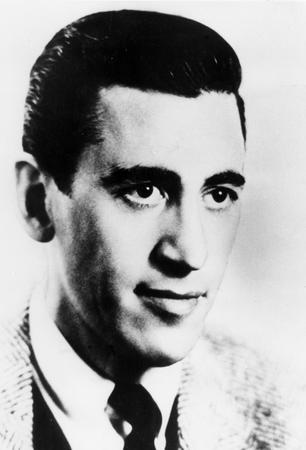
Just now I finished re-reading the first story in the aptly titled collection Nine Stories by Salinger. His clarity is incredible. His dialogue is amazing. His characters leave me grasping for the right cliche. And to be honest, I re-read the story because I know Salinger has that effect on me. His writing influences my writing, and for the better. Well, I think it's for the better. And since I'm trying to work on a few short stories for the Winter Bookquet at Multnomah Bible College on February 2--nice little ad there, eh Krispin?--I thought that going back to the stories that make me think about how I use words when I write would be a good beginning.
In addition, which you probably already noticed, reading these two pieces today has been the catalyst in getting me to write something on my blog that is truly mine for the first time in a long while. So this post is dedicated to G.E.M. and J.D.
Great quote...because it's true
"Oregon is the Canada of California."
--Stephen Colbert
I just had to share that with everyone.
--Stephen Colbert
I just had to share that with everyone.
Wednesday, January 11, 2006
Chuck Klosterman and race

This is a nice little article that Klosterman wrote for ESPN.com, where he routinely contributes. It's always fun to see what he has to say about sports, especially since he is recognized by so many for his insights into other areas of pop culture. So read it.
Monday, January 09, 2006
I may not have told you about this
The day after Thanksgiving I received a phone call from Daniel Golden. He was looking for Wheaton alum Josh Carlton. The link above is to the article he wrote which contains a little snippet from our conversation. I think he does a good job in the article, and I also think that he asks some good questions without oversimplifying or setting up straw men. Most of all, I appreciate the fact that Dr. Hochschild is getting a bit of recognition, albeit for unfortunate reasons, because he really has been a very influential person for me.
With that said, I've recently been reconsidering graduate study in philosophy, perhaps joining Shane in Belgium. And props to Tom for posting the link to this article first, since I didn't know how to get there online.
Friday, December 30, 2005
A link to a stupid article and me whining: an all-around great read
Like most of the posts on here, this one comes for no real reason and with no specific purpose. I've been reading in "my" room. The one in my parents' house that I dormified so that I could have my own space. It's nice. Except that I'm 24 and living in my parents' house. I wish I knew what life was really about. How to do it. People. Sure, I really do think that life is about people. But I don't really know what the hell that means. I have friends in town, but they're mostly in high school. If I hang out with them too much I get in trouble. I don't think I should, since I do live with my parents. Basicly I'm at their level. Maybe a little more mature. Sometimes. So I read. That's my outlet. But that's pretty lame. I think reading is good, worthwhile, and all sorts of other things, but a replacement for actually being with people? Nope. This is pretty much how I felt when I was staying with my brother. The best friends I had were Potok characters. Now they're members of the Karamozov family. I wish I knew what to do about it, but I don't.
And then there's this: as I finish writing this post I think about all of the people around the world who are actually facing hardship. None of them are spoiled enough to think about "what life's really about" or similar shit. And then, and then, I look back at a few sentences and hate my writing, when that's the thing I think I might like to do most. And the story that this links to might be the highlight of my night, since it plays a big part in my weekend: fantasy basketball.
Friday, December 16, 2005
More linking, this time to a Leonard Pitts article
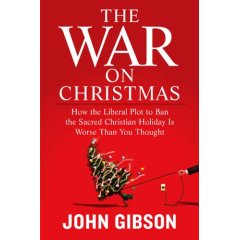
This is about the "war on Christmas." It's really good, and what's most amazing is...nevermind, it's not too long. Just read it.
Monday, December 12, 2005
Another link, a different perspective
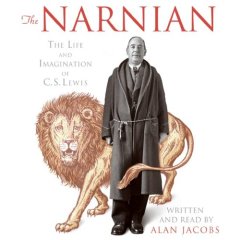
Joe wanted me to link to the New Yorker article that ripped on Jacobs, so I did.
Tuesday, December 06, 2005
Another link to something by Alan Jacobs
I know that most of the people who were consistently checking in with my blog are gone because I have alienated them, but I wanted to link to this article even if it only serves to give me quick access to it in the future. This is a review/essay about Harry Potter and the Half-Blood Prince by Dr. Alan Jacobs. I don't know what else to say about it except that it's quite insightful, and very helpful to my thinking about reading and about Harry.
Friday, November 18, 2005
Popularity on life's grandest scale: an NBA arena
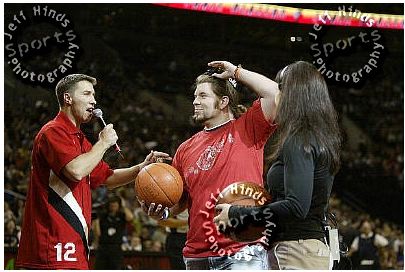
Things basically started when Jason asked me if I wanted to shoot a free throw during a time out in the second quarter. The catch was that I would be blind-folded. When he asked me, my immediate response was positive. Of course I want the chance to make a shot in front of a stadium full of people. But then I thought about it and realized that I didn't want to miss a shot in front of a stadium full of people. Given my basketball history and skill level, the second option seemed far more likely. But, as tends to happen, I decided the opportunity was worth the risk. He told me that we'd be meeting his friend Paul at gate A12 with nine minutes to go in the second quarter. With that, I sat down to relax and watch the game.
Except of course I couldn't relax. My nerves were wreaking all sorts of havoc on my body, making me quite uncomfortable, until the Blazers started playing really well. And then my stomach didn't hurt so much. Things went like that for a while. I sat there enjoying the game, every once in a while visualizing Michael Jordan making a free throw in Portland with his eyes closed or imagining all of those times in goal that I had to make big saves. Then we started off to rendezvous with Paul. The nerves came back.
We met Paul and he led us into the bowels of the Rose Garden. As we walked he explained to me exactly what would happen. I would get out to the line, I would get a chance to look at the hoop, I would put some black ski goggles over my eyes, and then I would have thirty seconds to put a basketball in the hoop. Event staff would be placing the balls in my hands, and they would be helping me by telling me if I needed to shoot weaker or stronger, to the left or to the right. As Paul told me all of this I realized that I would have a very small chance unless I made the first one, because the first one would be the only one that was purely based on my senses. As we walked I told Paul and Jason what I thought, and they had no response. When we got to the floor Todd, Paul's boss, explained everything to me again. The only difference was that Todd told me not to leave if I didn't make it during the thirty seconds. They would give me one last chance with my eyes open. At that my nerves really kicked in, because I couldn't imagine much more pressure than missing a bunch of free throws without seeing, and then getting one shot while seeing. The only way I could enjoy the minutes until my chance was to watch the game. Which I did. From the corner of the court.
As I watched Rasheed Wallace and Zach Randolph bang bodies not more than 20 yards from me, my nerves settled into a steady burn. The whistle for the third timeout was blown and Todd told me to get out on the court with him. Goggles in hand I followed him onto the floor.
We got to the line and Todd introduced me to the crowd. "With us tonight is Josh, all the way from Roseburg," rang through the stadium and brought my nerves back to the prominent place of my throat. Then Todd mentioned the time that Michael Jordan made his free throw with his eyes shut, and that to commemorate that, if I made one free throw in thirty seconds without being able to see, I would get a brand new pair of Jordan brand shoes.
All of this wasn't helping to calm me down, but then a strange thing happened. Todd told me to take one last look at the hoop, so I did. The funny thing about NBA arenas is that the hoops aren't right in front of a wall. In fact, there's a lot of space between the backboard and the nearest background. This serves to make it look a lot closer than a normal hoop, or at least it did for me. Which in turn served to ease my nerves. All of the sudden I was confident of my ability to get the ball to the hoop. My only concerns were putting it up straight and putting it up with enough touch that a bad shot had a better chance of going in. With that, I pantomimed one shot, and put on the goggles.
Todd handed me a ball, asked if I could see anything--which I couldn't--and asked if I was ready. I said I was, and he did the old "ready, GO!" thing. I had decided to do my normal free throw routine, something that any who've seen me shoot might not have advised since I don't make too many, and proceeded to spin the ball and dribble twice. Then I put up my shot. It felt good, but immediately I put my hands out for the next ball. After what seemed like a long time, I heard an explosion of noise as the crowd let me know that my first shot had gone in. Apparently they gave me a new ball at the same time, but I didn't remember that until I saw the pictures later. I was so dumbstruck by the idea that I had made the shot that I just stood there. When Todd proclaimed that I'd made it I ripped off the goggles. I have never felt quite like I felt with the whole Rose Garden cheering for me.
As we left the court I was congratulated by the front row ticket holders and VIPs. They gave me my certificate for my Jordans, and Jason and I walked back up to our section at the top. On the way every person who saw me gawked and congratulated me, complimenting my tremendous basketball skills. Our group screamed when I got back, as some hadn't even known where I was going when I left. As I sat down I tried to recreate what had just happened, but I couldn't. I decided a while ago that I would stop referring to new experiences as surreal, but that's what it was. It seemed like it never even happened. My stomach didn't calm down until the next morning.
The moral of the story: I rock when put in front of big crowds.
Therefore: we're getting the band back together and doing arena rock.
Except of course I couldn't relax. My nerves were wreaking all sorts of havoc on my body, making me quite uncomfortable, until the Blazers started playing really well. And then my stomach didn't hurt so much. Things went like that for a while. I sat there enjoying the game, every once in a while visualizing Michael Jordan making a free throw in Portland with his eyes closed or imagining all of those times in goal that I had to make big saves. Then we started off to rendezvous with Paul. The nerves came back.
We met Paul and he led us into the bowels of the Rose Garden. As we walked he explained to me exactly what would happen. I would get out to the line, I would get a chance to look at the hoop, I would put some black ski goggles over my eyes, and then I would have thirty seconds to put a basketball in the hoop. Event staff would be placing the balls in my hands, and they would be helping me by telling me if I needed to shoot weaker or stronger, to the left or to the right. As Paul told me all of this I realized that I would have a very small chance unless I made the first one, because the first one would be the only one that was purely based on my senses. As we walked I told Paul and Jason what I thought, and they had no response. When we got to the floor Todd, Paul's boss, explained everything to me again. The only difference was that Todd told me not to leave if I didn't make it during the thirty seconds. They would give me one last chance with my eyes open. At that my nerves really kicked in, because I couldn't imagine much more pressure than missing a bunch of free throws without seeing, and then getting one shot while seeing. The only way I could enjoy the minutes until my chance was to watch the game. Which I did. From the corner of the court.
As I watched Rasheed Wallace and Zach Randolph bang bodies not more than 20 yards from me, my nerves settled into a steady burn. The whistle for the third timeout was blown and Todd told me to get out on the court with him. Goggles in hand I followed him onto the floor.
We got to the line and Todd introduced me to the crowd. "With us tonight is Josh, all the way from Roseburg," rang through the stadium and brought my nerves back to the prominent place of my throat. Then Todd mentioned the time that Michael Jordan made his free throw with his eyes shut, and that to commemorate that, if I made one free throw in thirty seconds without being able to see, I would get a brand new pair of Jordan brand shoes.
All of this wasn't helping to calm me down, but then a strange thing happened. Todd told me to take one last look at the hoop, so I did. The funny thing about NBA arenas is that the hoops aren't right in front of a wall. In fact, there's a lot of space between the backboard and the nearest background. This serves to make it look a lot closer than a normal hoop, or at least it did for me. Which in turn served to ease my nerves. All of the sudden I was confident of my ability to get the ball to the hoop. My only concerns were putting it up straight and putting it up with enough touch that a bad shot had a better chance of going in. With that, I pantomimed one shot, and put on the goggles.

Todd handed me a ball, asked if I could see anything--which I couldn't--and asked if I was ready. I said I was, and he did the old "ready, GO!" thing. I had decided to do my normal free throw routine, something that any who've seen me shoot might not have advised since I don't make too many, and proceeded to spin the ball and dribble twice. Then I put up my shot. It felt good, but immediately I put my hands out for the next ball. After what seemed like a long time, I heard an explosion of noise as the crowd let me know that my first shot had gone in. Apparently they gave me a new ball at the same time, but I didn't remember that until I saw the pictures later. I was so dumbstruck by the idea that I had made the shot that I just stood there. When Todd proclaimed that I'd made it I ripped off the goggles. I have never felt quite like I felt with the whole Rose Garden cheering for me.
As we left the court I was congratulated by the front row ticket holders and VIPs. They gave me my certificate for my Jordans, and Jason and I walked back up to our section at the top. On the way every person who saw me gawked and congratulated me, complimenting my tremendous basketball skills. Our group screamed when I got back, as some hadn't even known where I was going when I left. As I sat down I tried to recreate what had just happened, but I couldn't. I decided a while ago that I would stop referring to new experiences as surreal, but that's what it was. It seemed like it never even happened. My stomach didn't calm down until the next morning.
The moral of the story: I rock when put in front of big crowds.
Therefore: we're getting the band back together and doing arena rock.
Thursday, October 06, 2005
my most recent theological worldview
 | You scored as Neo orthodox. You are neo-orthodox. You reject the human-centredness and scepticism of liberal theology, but neither do you go to the other extreme and make the Bible the central issue for faith. You believe that Christ is God's most important revelation to humanity, and the Trinity is hugely important in your theology. The Bible is also important because it points us to the revelation of Christ. You are influenced by Karl Barth and P T Forsyth.
What's your theological worldview? created with QuizFarm.com |
Friday, September 30, 2005
another change in location
it's been a really long time since i've posted. i started school this week. i'm quite excited about all three of my classes, and expect to get a ton from them. there may be a bit more excitement for my class "theology, pop culture and the emerging church," which i wasn't even that excited about to begin with. the professor used to tour with AC/DC, among others. at the moment i'm sitting in stephen's dorm room. i've been living here since i got back from phoenix. this certainly isn't the ideal situation for many reasons, but it will suffice until i have a job, at which i will hopefully be able to find a cheapish room somewhere. on the job front: i had an interview with 24hour fitness the other day, and it seems likely that i'll be working there very soon. in other news: i'm headed to chicago october 20-23 for a wedding. i can't wait to get out there and see jacob and the rest of my long-time wheaton friends, especially the dignan boys. oh yeah, the wedding should be good too. and perhaps another dignan reunion show? i'm only imagining it right now. so far i'm not too impressed with seminarians of the female persuasion. actually, i haven't been drawn to many of the seminarians at all. there are a few guys i've clicked with already that should become friends to some degree, but with me living down here that degree might be small. i think that's about all. i've been to the beach once, at night, so i may venture out there today to cool off. it's been so hot here the last few days. pretty ridiculous.
Wednesday, September 07, 2005
quick quote from reading Yancey
“Where there is no longer any opportunity for doubt, there is no longer any opportunity for faith either.” Paul Tournier, quoted in Dissapointment with God, by Philip Yancey.
Subscribe to:
Posts (Atom)